- 4 min reading
Aurora Village is Sweden’s largest worker accommodation project. Developed for SSAB’s industrial transformation, it has been created as a place where thousands of people will be able to live over several years. Together with Strawberry and Lynra, Adapteo has developed a model that brings together 2,000 rooms, full-service operations and shared spaces for food, recovery and social life - to make everyday life work for the people building one of Sweden’s most important industrial projects.
A challenge beyond the number of beds
Large industrial projects often create urgent accommodation needs, especially in places where housing is already limited. In Luleå, thousands of temporary workers would need somewhere to stay, without putting unnecessary pressure on the local housing market, infrastructure, and services.
For this reason, the starting point of this project was broader than simply providing rooms with a bed to sleep in. SSAB and the municipality understood that this accommodation needed to work overtime, and the question was very central to them. Without a functioning place for people to live, the ability to attract and retain workers over several years would be harder, more expensive, and less predictable.
They were clear in their ambition that the solution had to support both the industrial project and the people working in it. Exactly how this solution was going to look, however, was not defined in detail.
This gave Adapteo a golden opportunity to develop that ambition into a complete village concept. Instead of focusing only on buildings, the project brought together accommodation, service, operations, food, transport, security and places to spend time outside work.
A village with services built in
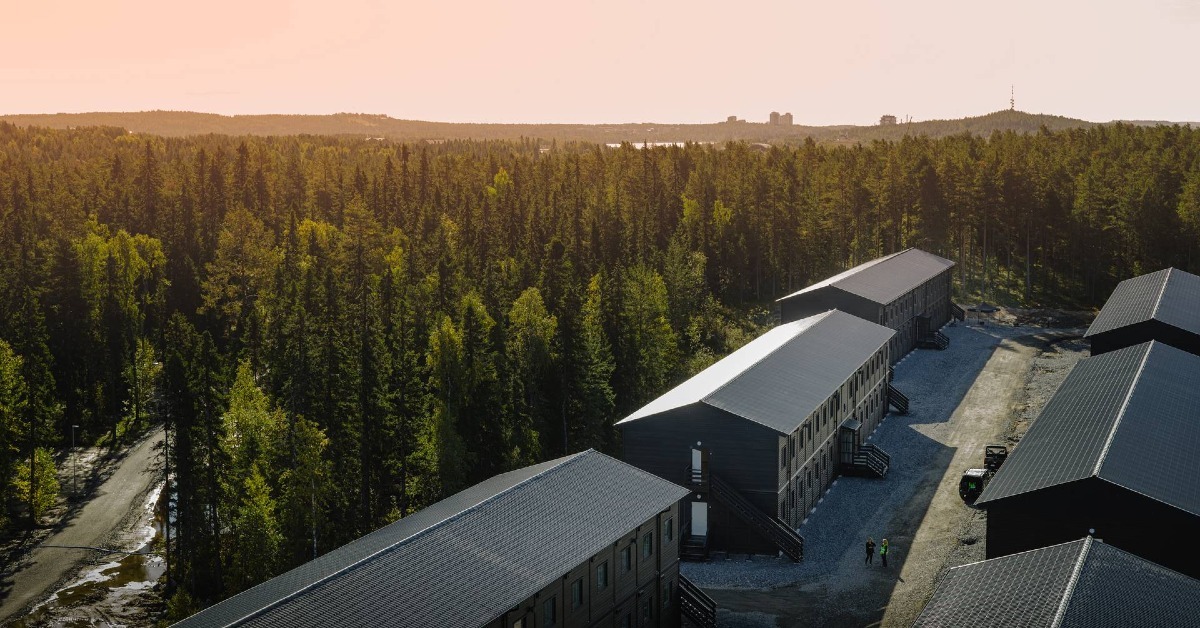
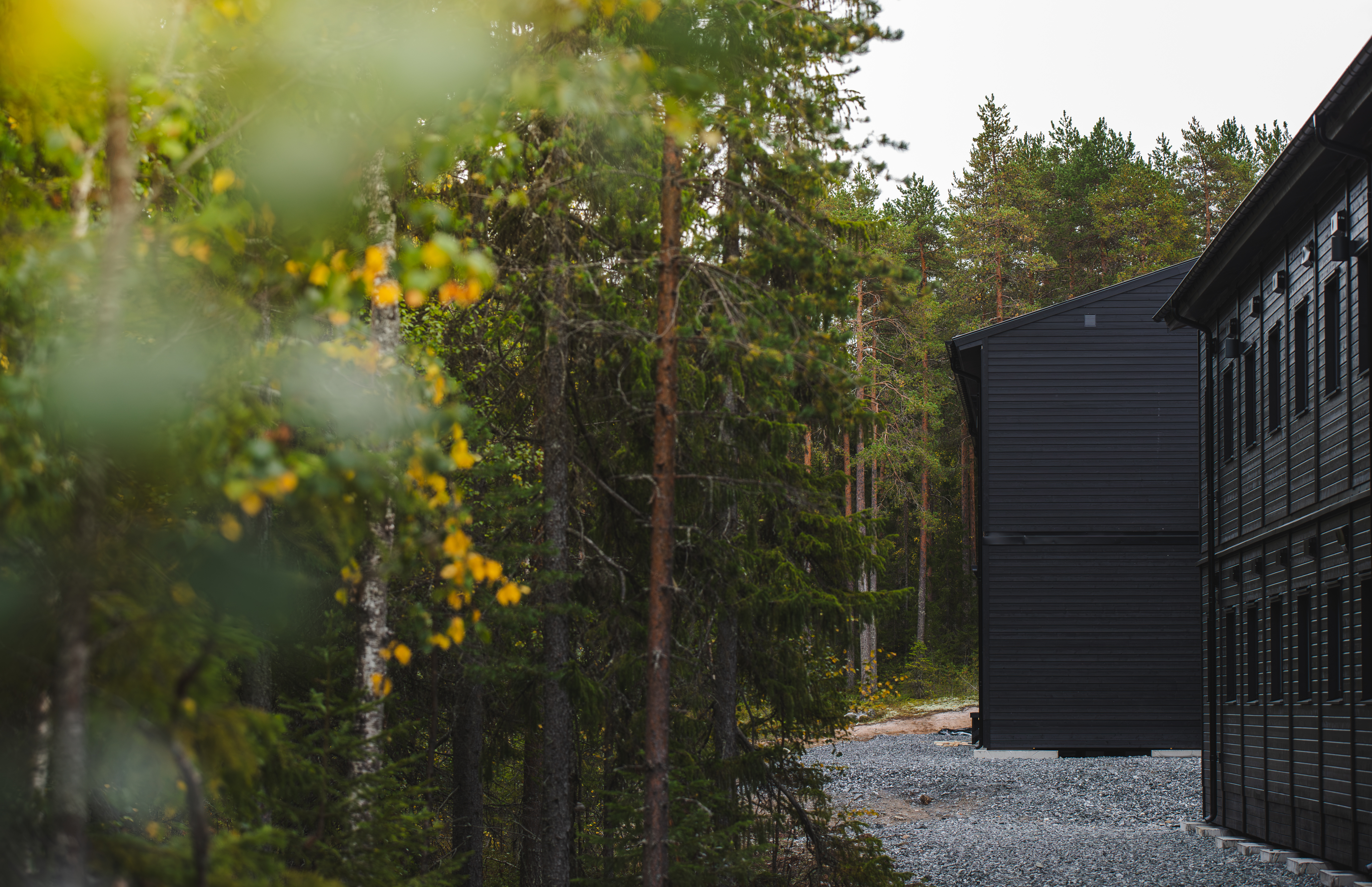
Aurora Village consists of 39 buildings, including 37 residential buildings, one service building and one activity building. Together, they create accommodation for approximately 2,000 people.
The layout is designed as a village rather than a row of units. Residential buildings are complemented by a service building for food, reception and everyday support, and an activity building for recreation and shared activities. Outside you will find football and boule courts, walking routes and well-planned outdoor areas that help structure the site and make it easier to move through. The municipality also adapted local bus routes to connect Aurora Village with the surrounding area and make daily travel easier for future residents.
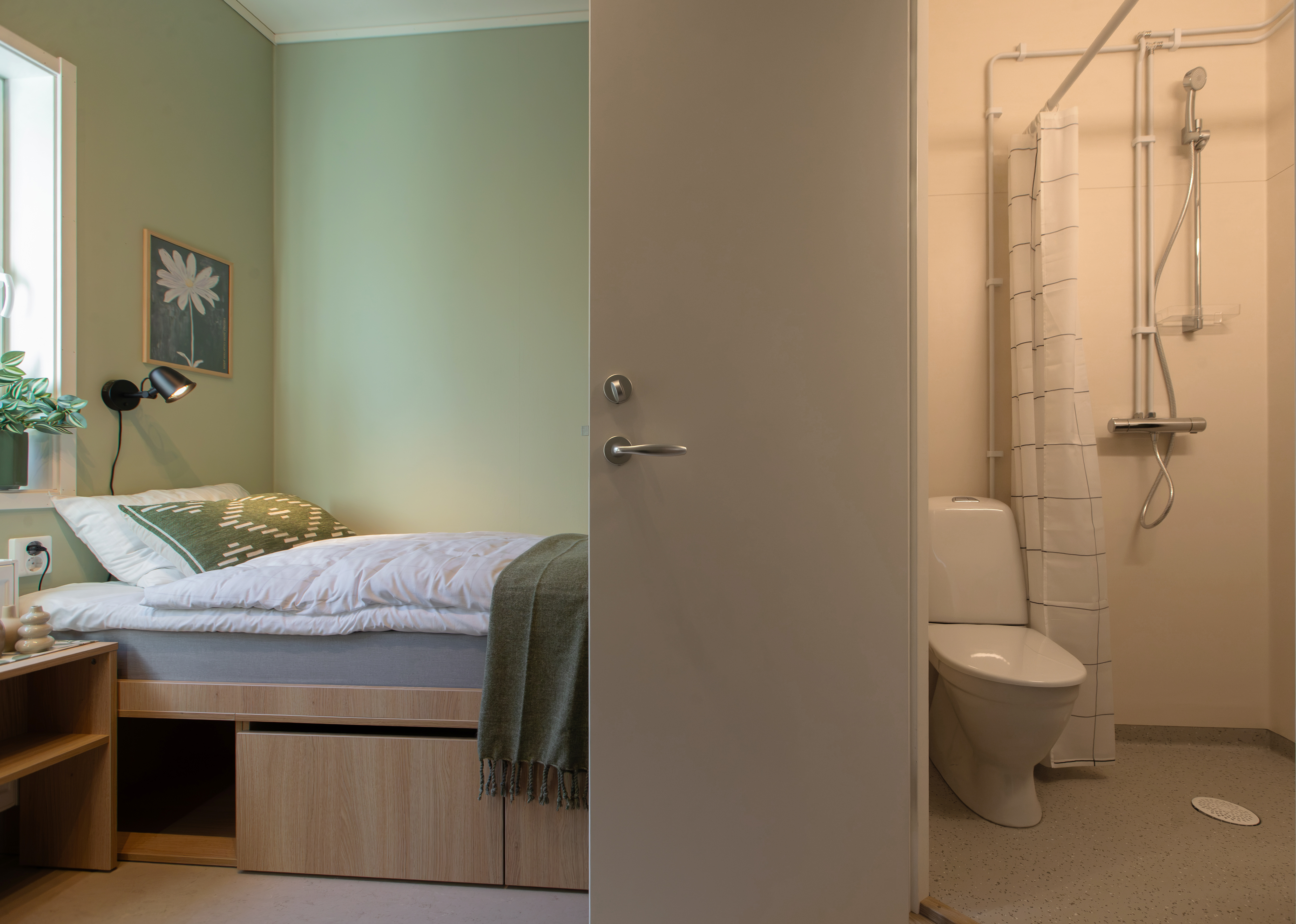
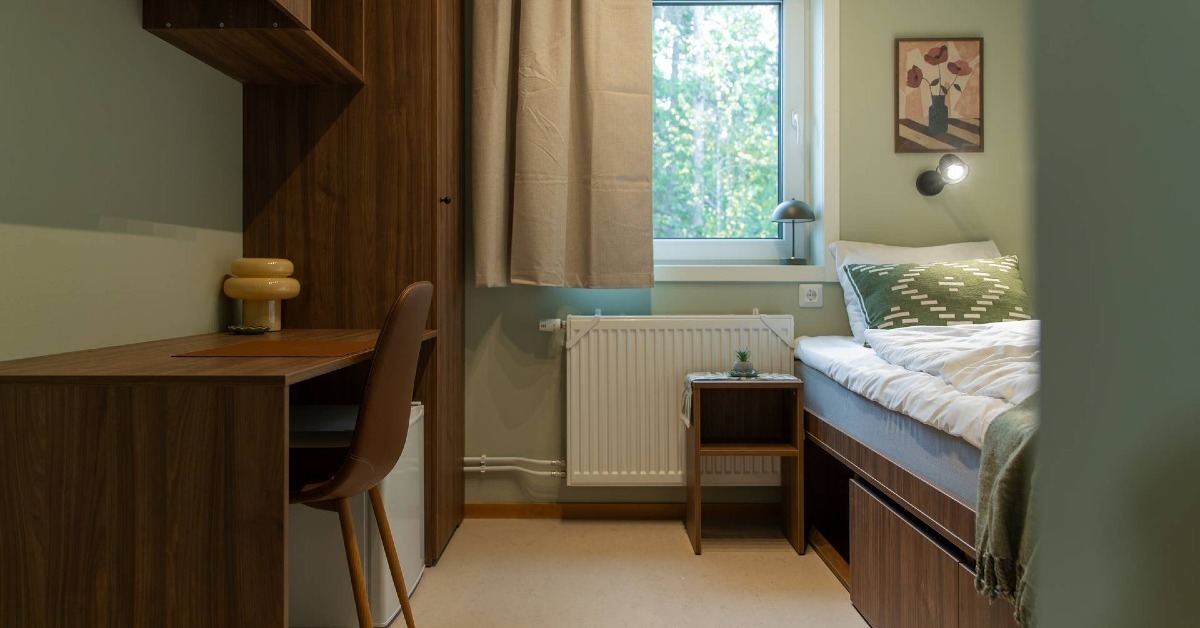
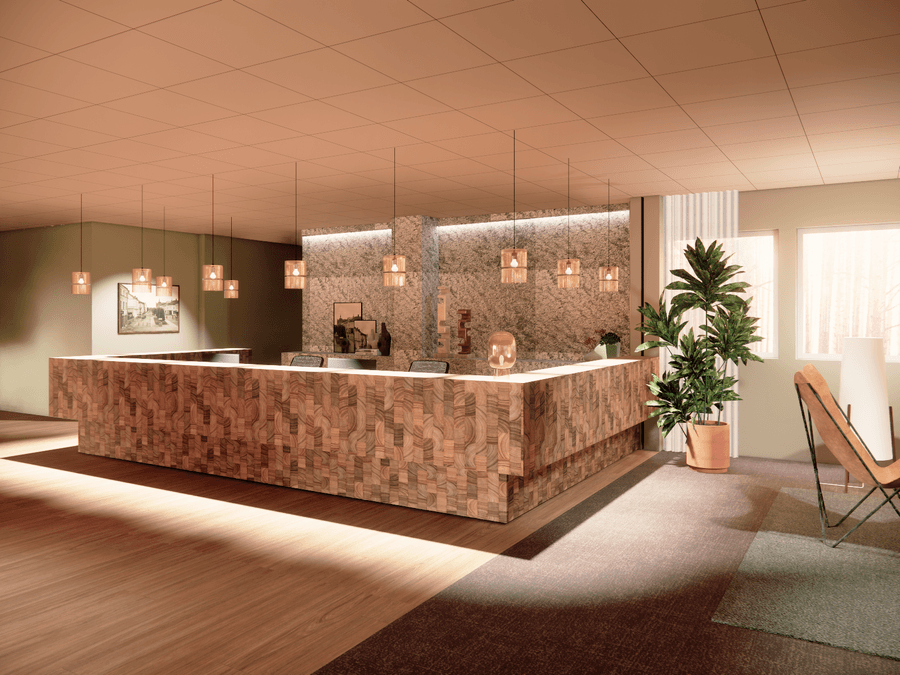
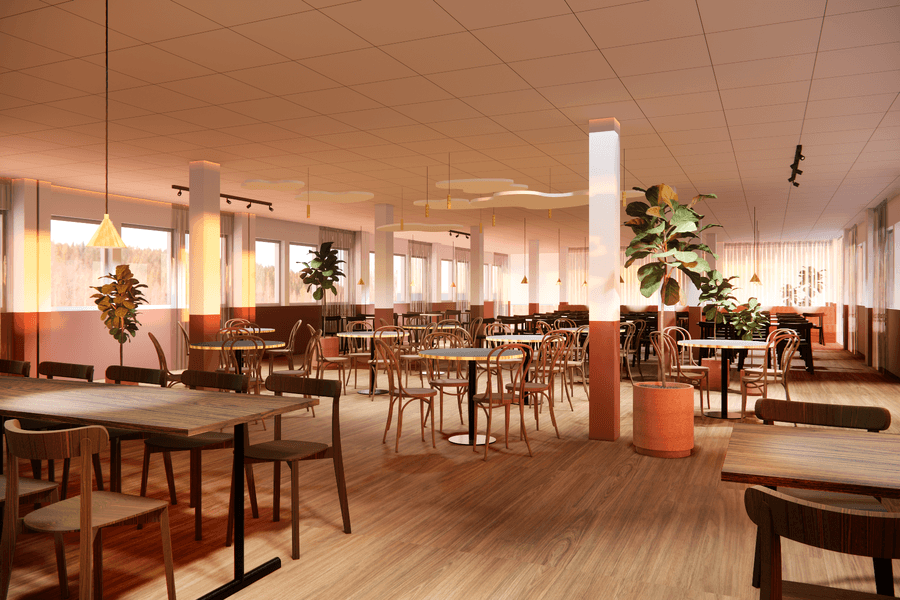
The interior has been a central part of the project. Instead of the standard: white walls, a bed, a desk and not much else, we wanted to take a different approach. Together with stylists at Tengbom, colour, materials and furniture were used to create rooms and shared spaces that feel warmer and less temporary. Some of these changes were quite small in themselves, but together they changed the overall impression of the rooms.
“Anyone can talk about rooms and modules. What makes Aurora different is everything around them: the service, the routines, the activities, the infrastructure and the feeling that this is a place built for people to actually live in.”
- Souleimane Sellidj, Project Delivery Manager for Aurora Village
Life between shifts
Worker accommodation is often judged by whether it provides enough beds. Aurora Village starts from a broader view: if people are expected to stay for longer periods, the hours outside work play a huge part.
Many residents will be away from family and their usual routines. Needless to say, a room to sleep in is necessary, but it is not the same as a whole environment that supports daily life.
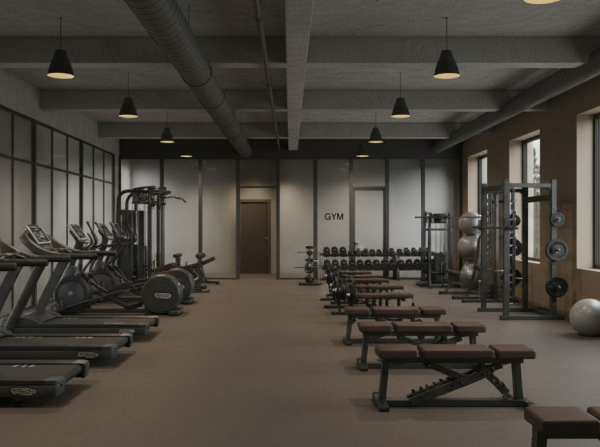
At Aurora, the restaurant, gym, activity spaces and outdoor areas give residents options after work: to have a cooked meal together with colleagues, to train, to watch a film, to take part in activities or, of course, to relax in their own welcoming room. For workers choosing between assignments far from home, those details can make a real difference. Aurora gives employers something more to offer than a bed in a temporary unit.
With service and operations handled through Strawberry Living/Lynra, Aurora is operated with routines more similar to a hotel than traditional temporary accommodation. Reception, check-in, meals, scheduled activities, and present and friendly staff, help create predictability and security from the moment residents arrive.
Handling the parts in between
What makes Aurora Village complex is not its size, but everything that comes with it: land, permits, planning, groundworks, infrastructure, utilities, heating, ventilation, fire safety, security, transport, service partners and ongoing operations.
Each part affects the others. And a building is not ready because it has been assembled; it is ready when it can safely be used, operated and connected to the rest of the village - and when the necessary approvals are in place.
Adapteo has covered most of this coordination. The project has required close dialogue with the customer, the municipality, service partners, designers, contractors and technical specialists. It has also required decisions that balance speed with quality: how to deliver quickly without reducing the accommodation to the kind of basic solution Aurora was never meant to become.
The village also had to work in relation to Luleå. By planning transport, services and site structure from the beginning, the project could fit more naturally into the surrounding community and make the accommodation easier for the locals to accept as part of the industrial transformation.
This is where our role becomes clear – making a complex accommodation challenge manageable for the customer. The customer shouldn’t have to become an expert in worker villages! They should be able to rely on a partner that understands how the pieces fit together.”
- David Broberg Engstrand, Business Development Director at Adapteo Sweden
Using modules supports speed. Aurora will be delivered and opened in phases, allowing buildings to be made available progressively as they are completed and approved. In July of 2026, a first few residents moved in while work continued on other parts of the village. For large industrial projects, that means usable capacity can become available earlier, while the overall project keeps moving.
Aurora shows where worker accommodation is heading. It is not only about how many rooms you can provide, but about whether the place works for the people, the project and the surrounding community.”
- David Broberg Engstrand, Business Development Director at Adapteo Sweden
A new reference point for worker accommodation
Aurora Village is proof that worker accommodation can be treated as part of a project infrastructure, rather than an afterthought. By bringing together scale, modularity, hotel-like service, security, transport, interior design and social functions, it gives the customer a more complete way to keep the project staffed and moving.
For contractors and employers, it also makes the assignment easier to offer. In remote or housing-constrained locations, a better place to live can make work away from home more attractive, more likely to be repeated and easier to stand behind.
For the people living there, the same qualities matter in a different way. When workers spend long periods away from home, the living environment can play an important role in their wellbeing and recovery.
In that sense, Aurora Village raises the standard not by being bigger, but by being more complete.