
Axel Toyler
Head of Business Development
Adapteo Sweden
-1.jpg?width=1920&name=Split%20headline%20and%20image%20(2)-1.jpg)
Worker accommodation often starts with a practical need: a large construction, infrastructure or industrial project brings in workers from outside the local area, and they need somewhere to stay close to the site. Accommodation can affect the project timeline, permits, infrastructure, safety, services, daily operations, the surrounding community, and the wellbeing of the people living there. That is why it helps to think about worker accommodation early, and to involve a partner who can turn a broad need into a functioning solution.
In this article we have interviewed three experts who share what project owners often underestimate about worker accommodation, and how the right partner can help make the whole solution work.
Adapteo Sweden

Adapteo Sweden

Adapteo Sweden
Worker accommodation should be part of the project plan early. The earlier the need is discussed, the easier it becomes to understand location, permits, infrastructure, service level, transport and operations.
Axel Toyler, Head of Business Development at Adapteo Sweden, is clear that timing matters:
“It's a good idea to think about this question in advance. There are building permits that need to be handled. Around a year and a half before, you need to start addressing it. You need to make a decision about a year before, because building permit processes take time and establishment takes time. But early planning does not mean you have to arrive with a finished blueprint.”
“Start early and do not get too caught up in the details. Do not let this feel like something huge and complex. Start the dialogue and define which functions you need. How many people, for how long, in what location, and start the dialogue so that Adapteo can propose a solution.”
That shift is important. Instead of the customer needing to solve every question, the dialogue can focus on what the accommodation must make possible. From there, the solution can take shape.
David Broberg Engstrand, Business Development Director at Adapteo Sweden, also points out that accommodation planning can affect more than the project owner. When many workers arrive in one place for a limited time, the local community can also be affected.
There may be thousands of people who need to live or stay in one place for a limited period of time, at a scale that a town cannot absorb without things becoming somewhat chaotic. Instead, you can build something that works, and that is also part of the community.”
For project owners, early planning is therefore not only about being ready on time, but about creating an accommodation solution that works for the project, the workers, and the place around it.
.jpg?width=1200&height=628&name=SE_WA_C15_CASE_MRKT_STEGRA_SLIPV%C3%84GEN_HIRES_2024%20(55).jpg)
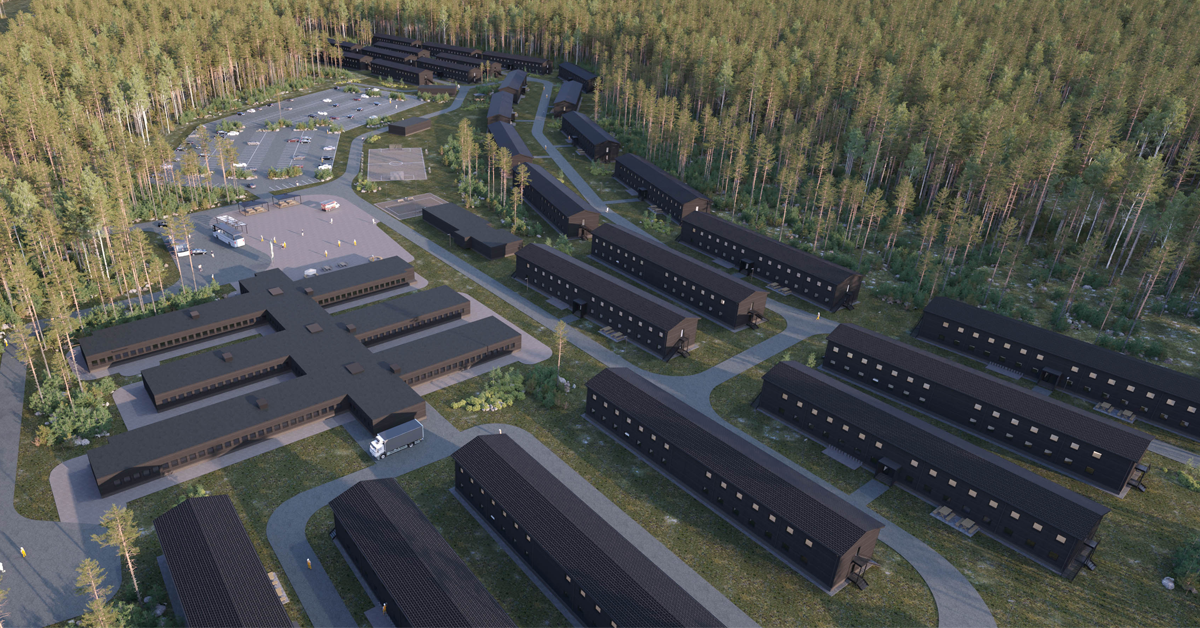
A worker accommodation site is more than the buildings placed on it. It needs land, access, groundworks, power, water, heating, internet, traffic flows, fire safety, inspections, permits, and security. It may also need services such as transport, cleaning, check-in, food, and activities.
That can be difficult for a project owner to define alone, especially when their core business is not accommodation. The important question is not only “What should be built?” but “What does the accommodation need to do every day?”
Axel describes how that kind of dialogue works:
“We start by asking about all the different areas. Everything from the commercial setup to understanding how the need looks over time. Other important things are service level: how much of the solution do you want us to provide, and how much do you want to do yourselves? Then there are surrounding services such as transport, cleaning, check-in and check-out, food and activities. It is much more than walls and roofs. Actual people are going to live there.”
This is where a full-service partner can reduce or even remove the burden on the customer. The customer does not need to know every technical or operational detail from the beginning. What matters is that someone takes responsibility for turning the need into a functioning whole.
Souleimane Sellidj, Project Delivery Manager at Adapteo Sweden, describes the scope in practical terms:
“It’s not about the modules. It is the whole picture: the infrastructure in the ground, district heating, restaurants, how cars move through the area, how security works, and what activities we can set up on site.”
That wider view is often what makes the difference. Worker accommodation sometimes needs to function as a living environment, a service environment and an operational site at the same time.
For example, if food is needed, the best answer may not always be to put a small kitchen in every room. Here’s what Axel shares:
“Depending on what the solution needs to cover and for how long, having a kitchen in each room isn’t necessarily the best solution. In the Aurora Village project for example, we suggested having a restaurant instead. At scale, a canteen solution can make meals easier to manage, support consistency and create a natural place for people to meet, eat and socialise.”
The same applies to the rest of the site. Transport, safety, movement, maintenance, shared spaces, and daily routines all need to work together. That is why site complexity should not be left until after the buildings are specified.
.jpg)
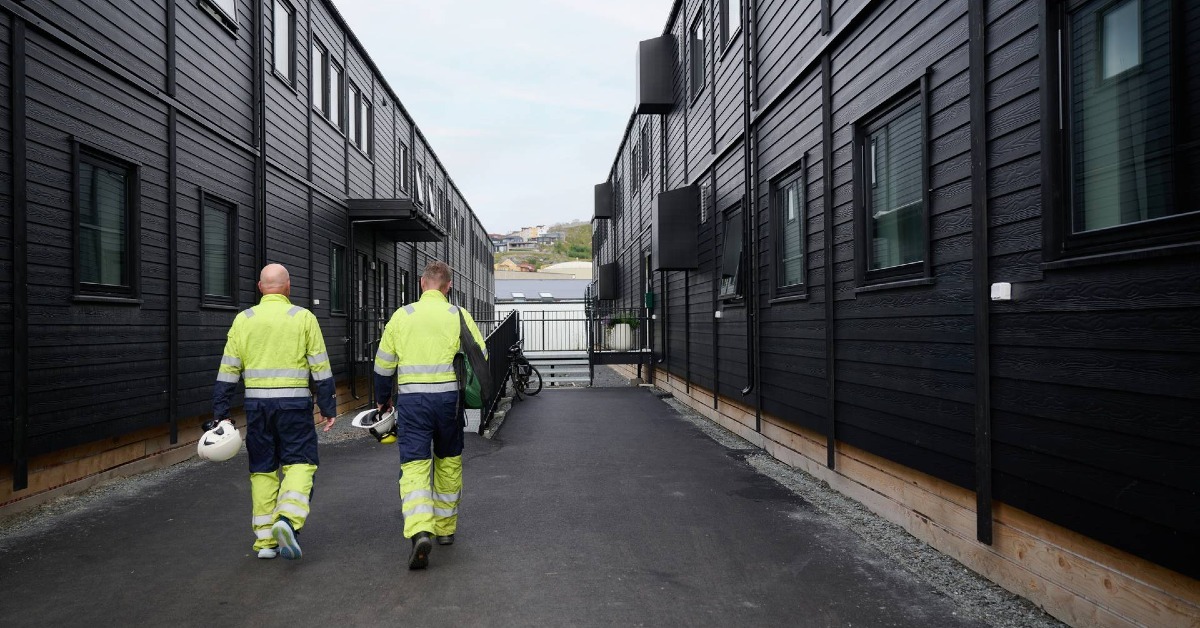
Permits, inspections and technical approvals are not side issues. They can directly affect when people are allowed to move in.
A building may be physically in place, but it still needs the right approvals before it can be used. When compliance is considered early, it becomes part of the delivery process. When it is left too late, it can become a risk to the schedule.
Souleimane explains the basic distinction:
“A start notice means I’m allowed to start building. A final notice is what allows someone to move in. You can also get an interim final notice. That means the building is not 100 percent finished, but it is safe to live there. You may not have finished painting, or completed the stairs exactly as planned, but people can get in and out in a safe way.”
In modular projects, phased delivery can be an advantage. Parts of the accommodation may be completed and approved before the full site is finished. But that still requires close coordination with permits, inspections and technical systems.
“I’m definitely not saying that project owners need to become compliance experts. I just want to say that compliance needs to be part of the plan from the start, with clear ownership and experienced coordination.”
A bed solves one part of the problem. It does not necessarily create a place where people can rest, recover, and feel ready for the next working day.
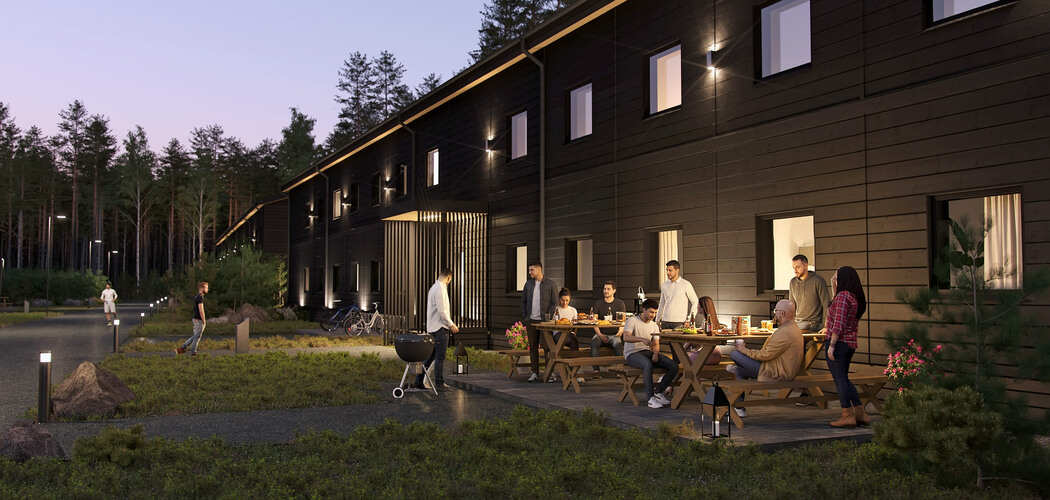
Worker accommodation should support daily life. That means food, routines, privacy, activity, safety, social spaces, and recovery. This is not only a wellbeing issue - it can also affect performance.
Axel connects the quality of accommodation (in this case, the Aurora Village) directly to the quality of work:
“I think our biggest contribution in this case is that they get well-rested workers who will have healthy food and the opportunity to be active in their free time. That means they can perform at work. What is it worth to have high-performing workers compared with tired, hungry, or sick workers? The cost is enormous if a project that is going to produce thousands of tonnes of steel per year is delayed by just a month.”
David brings the same point back to the everyday experience of the person living there:
“If I lived here, how would I like it to be? I am far from home. I do not have my family here. I do not have my friends. I have no social context except work, which is probably physically demanding, with long days. When you come home, if you only have a room to go into and nothing more, you might not feel great. And you are probably not very recovered the day after either.”
That is why daily life should be designed intentionally. A good accommodation solution should make it easier for people to eat well, move around safely, meet others, and build routines while they are away from home.
Souleimane gives examples of how physical planning can support that:
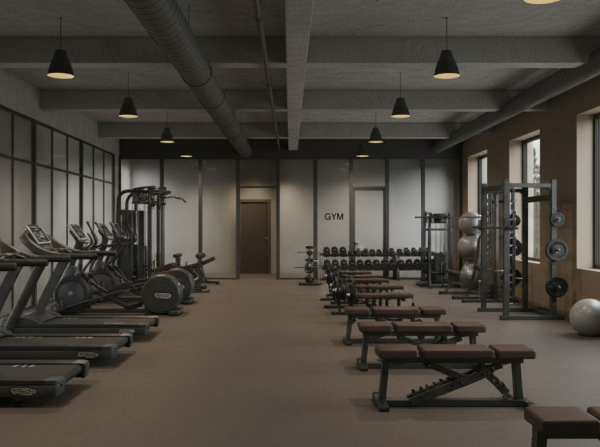
“In the Aurora Village, we thought through the landscape so that people can move to and from places in a safe way. You should be able to work out, and not only with weights. There are cross trainer machines, a gym inspired by the CrossFit world, outdoor gym, cinema room, conference room, and an actual library!”
The point is not to add features for the sake of it, but again, to create an environment where people can live well enough to recover, feel welcome, and do their work.
.jpg)
Once people move in, the accommodation has to function every day. That includes potential check-in, cleaning, meals, rules, safety, maintenance, transport, activities, and communication with the companies using the accommodation.
If ownership is unclear, these questions can become the customer’s problem. With the right setup, they become part of a managed solution.
Axel describes the value of having one responsible partner:
If we have developed a full solution, we take full responsibility for the delivery and operation of the establishment. For the customer, it is very simple. They only need to talk to Adapteo, and they do not really need to be responsible for anything. That makes it very easy for the customer.”
David describes the same responsibility as a question of presence and commitment:
“We do not just put our modules there and leave. We are there, we will be there, and we want to be there.”
That presence is part of what makes a full-service approach different from simply delivering buildings.
It is really about the whole. We can do more than just delivering modules. We can be a single point of contact. We can solve everything, from receiving a need to handing over a key to a finished product.”
Axel also highlights the breadth of what Adapteo can coordinate with partners:
“We administer laundry, food and bus transport. Talk to the municipality. Together with our partners, we bring the whole thing together.”
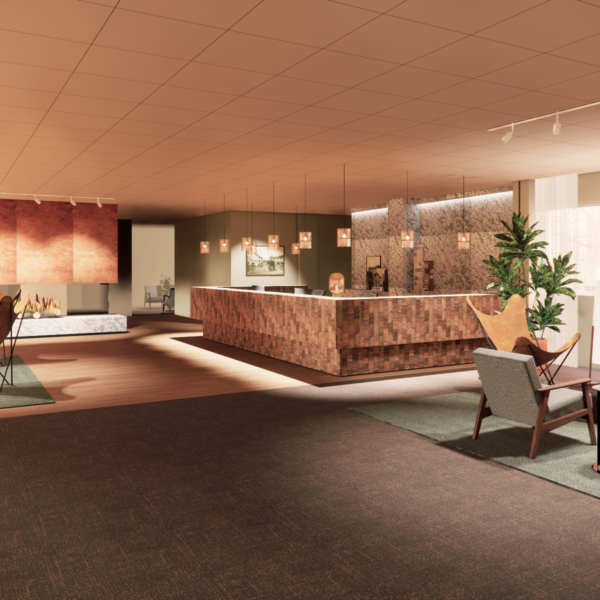
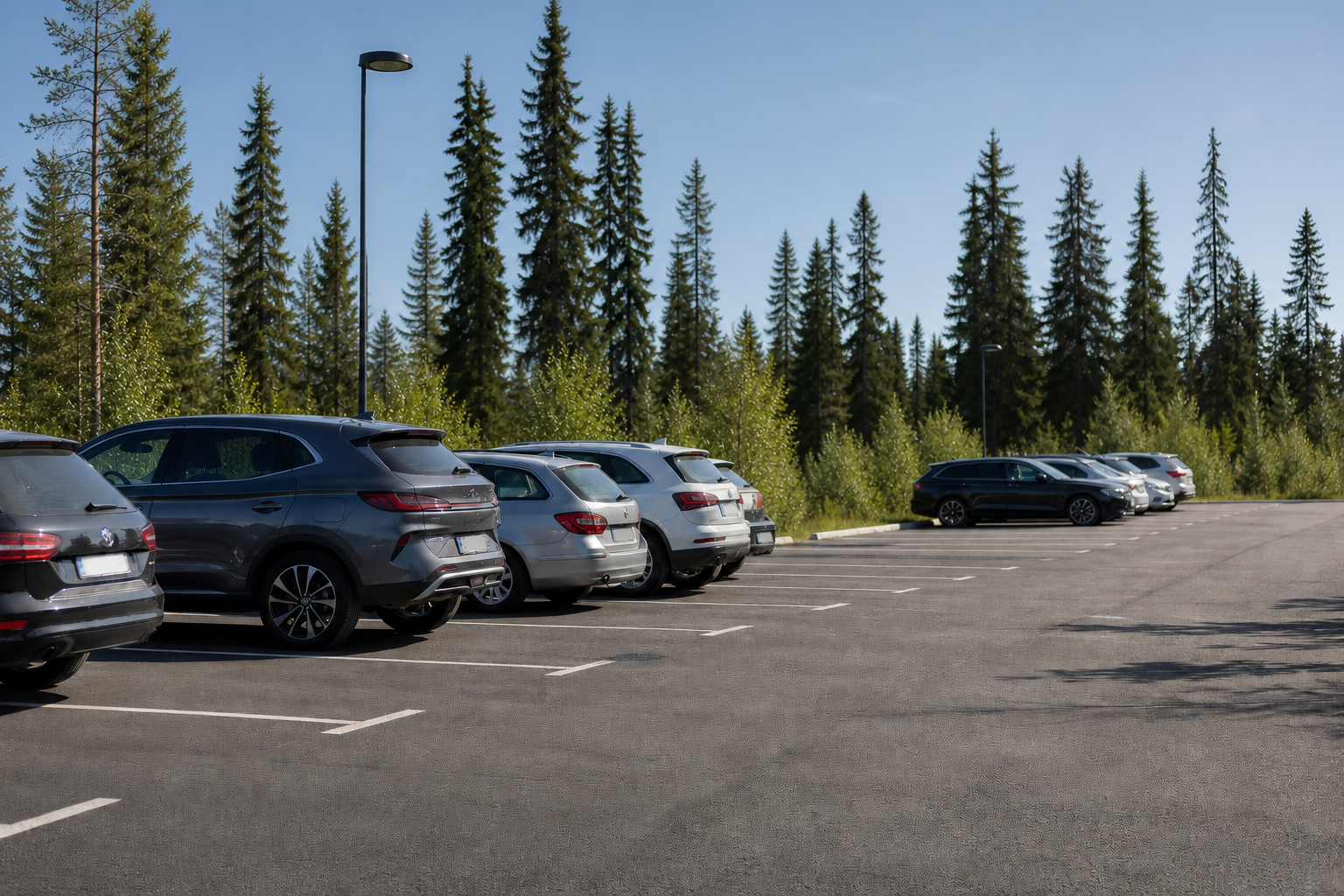
There is no single model for worker accommodation. Every project has its own location, workforce, timeline, service needs, climate, regulations, and operating model.
The best solution is not necessarily the largest or most advanced one, but one that fits the need.
Axel puts it like this:
“Every project is different. The Aurora Village is not a standard that has to be recreated in more places. We don't just copy-paste our solutions. Different places can have different needs, and Adapteo can adapt to the solution. It will always be high quality, but it does not need to be ‘extra everything’. We can have many alternative configurations depending on the situation.”
Aurora Village is one example of what can be done at scale, but the broader lesson applies to any project owner facing worker accommodation needs: start early, define the function, clarify responsibility and choose a partner who can make the whole solution work.
With the right partner, worker accommodation can support the project timeline, reduce pressure on the customer, create a better everyday experience for workers and provide one clear structure for operations.
Or, as Axel says, the need is not just for houses. It is for something that works.