- 8 min reading
.jpg?width=1920&name=Split%20headline%20and%20image%20(4).jpg)
How many people need a place to sleep? Where can they stay? How quickly can we have housing in place?
These are important questions, and they are usually where the conversation starts. But they are not where it ends. For large industrial, construction, energy and infrastructure projects, worker accommodation can affect whether the project starts on time, how smoothly the setup runs, and how well the workforce can rest, recover and function after long working days.
If the question of worker accommodation is handled too late, it can become a bottleneck. If the location is remote – which is quite often the case – logistics become more demanding. And if the living conditions aren’t great, it’s likely to affect the workers’ wellbeing – and the customer’s ability to attract the right people!
It’s pretty simple: Worker accommodation is a substantial part of project success.
What is worker accommodation?
Worker accommodation is temporary housing for employees, contractors and subcontractors who need to be close to a project site for a limited period.
It is commonly used for large construction projects, industrial investments, energy projects, infrastructure work, and remote operations where the local housing market cannot support a sudden surge in people.
A worker accommodation solution can include a wide range of spaces. At its simplest, worker accommodation gives people a place to stay. At its best, it creates a safe, practical and well-functioning everyday environment that supports both the project and the people living there.
1. Plan early so accommodation does not become a bottleneck
Large projects depend on the workforce being able to arrive when the project needs them. If the people are contracted, the work is scheduled and the site is ready, accommodation should not be the thing that holds everything back. But that can happen when housing is handled too late.
This is especially true when many workers need to arrive within a short time. In smaller towns, remote areas or regions with an already limited housing market, hotels and rental homes may not be able to accommodate hundreds, or even thousands, of people arriving almost at once.
That is why it is a good idea to discuss worker accommodation early. Building permits, site preparation, service planning and establishment all take time. For larger projects, the accommodation question may need to be raised long before workers are due to arrive, so the solution can be designed, approved, and delivered in time.
Time pressure in practice: Hammerfest
This project in Hammerfest is a good example of how quickly accommodation can become business-critical. For a temporary service project in the oil and energy sector, the customer needed accommodation for several hundred workers in the remote location of Hammerfest, Norway – one of the northernmost towns in the world. The existing local capacity would not have been enough to house that many people. Stord Innkvartering, part of Adapteo Group, helped establish an accommodation village that could support the urgent need.
The case shows how important speed and experience can be when accommodation is needed quickly. In time-critical projects, an experienced partner can help coordinate the setup, align delivery with the wider project schedule, and create a practical way to get the workforce in place.
.jpg?width=1200&height=628&name=NO_WA_CASE_Stord_Hammerfest_Drone_2025%20(4).jpg)
2. Remote locations require more than standard delivery
The location often decides how complex a project becomes. In our line of work, worker accommodation in remote locations is closer to the rule than the exception. Long distances, challenging weather, limited infrastructure, local ground conditions, and transport routes will all affect the solution.
Remote projects raise many practical questions:
-
Is the road network suitable?
-
Is transport by boat needed?
-
What groundworks are required?
-
Can installation happen in winter?
-
How will people travel between the accommodation and the worksite?
-
What services need to be available on site?
In northern locations, winter can make the project more complex. Snow, darkness, storms and low temperatures can affect transport, establishment work, installation, and the working environment for the people delivering the solution.
The project in Hammerfest brought together many of the things that can make worker accommodation challenging: a remote northern location, difficult winter conditions, limited local capacity and logistics that included transporting modules by boat. When the setup has to be completed in snow, darkness and tough surroundings, the experience shows in the details - from logistics and site establishment to infrastructure, local conditions and the everyday life that needs to work once people move in.
3. Compliance and operations must be planned from the start
Worker accommodation needs to meet the right requirements from day one. Depending on the country, location and project type, this can include requirements related to:
-
Safety
-
Fire protection
-
Ventilation
-
Accessibility
-
Local building regulations
-
Permits
-
Energy performance
-
Site operations
-
Technical standards
-
Service and maintenance routines
Yes, compliance is partly about the right approvals, but mainly about making the accommodation work safely in everyday use. The residents will need heating, ventilation, lighting, water, electricity, transport, and emergency routines. Service and maintenance also need to be planned, because the accommodation has to work every day.
If these details are missed, the project can face delays, extra costs, or operational problems, not to mention unhappy workers. We’ll identify what is needed, design the right solution, and reduce the details the project owner needs to manage alone.
.jpg)
.jpg)
4. Accommodation that supports the people living there
A good workforce needs a good place to stay. For many workers, especially on remote or demanding projects, the accommodation is where they recover after long days. It affects sleep, routines, privacy, social life, and the feeling of being taken care of.
The quality of accommodation can also affect how attractive a project is. If workers have a choice between assignments, it's hardly surprising that the living standards matter and affect their decision. For employers and project owners, better accommodation can support recruitment, retention, and workforce satisfaction.
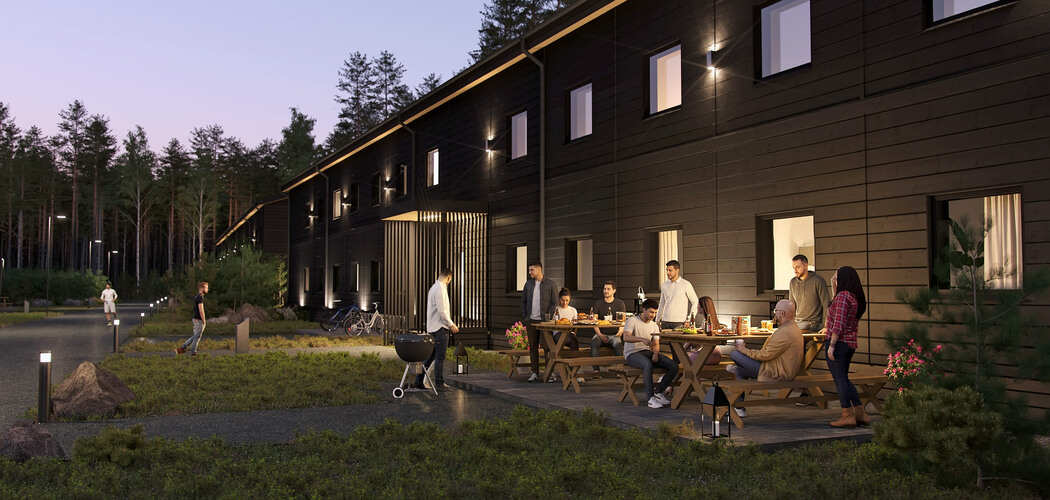
Now, that does not mean every project needs luxury, but simply that the accommodation should work well for the people who live there. Private rooms, good bathrooms, proper heating, reliable ventilation, laundry facilities, canteens, gyms, social areas, and outdoor spaces can all make everyday life easier. Small details can make a big difference when people are away from home for weeks or months at a time.
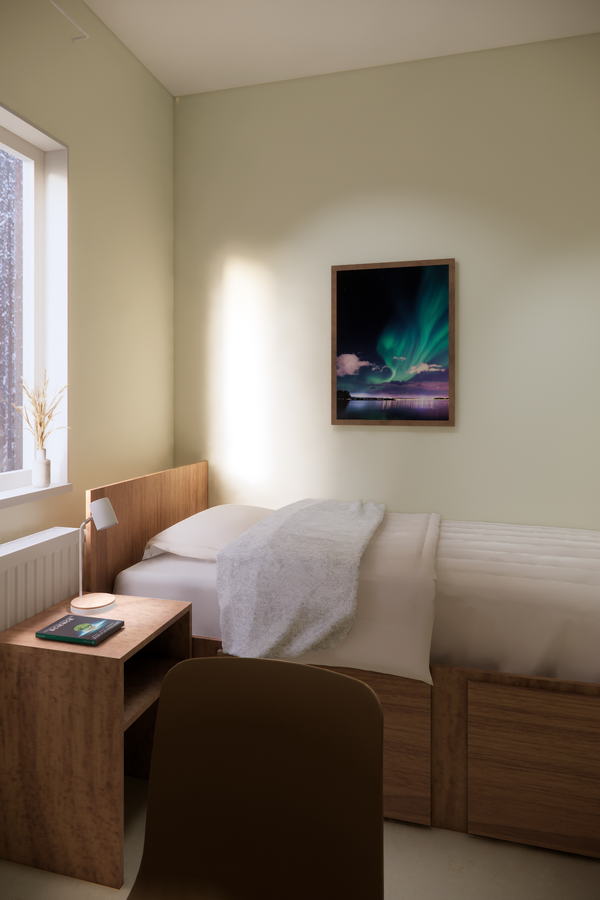
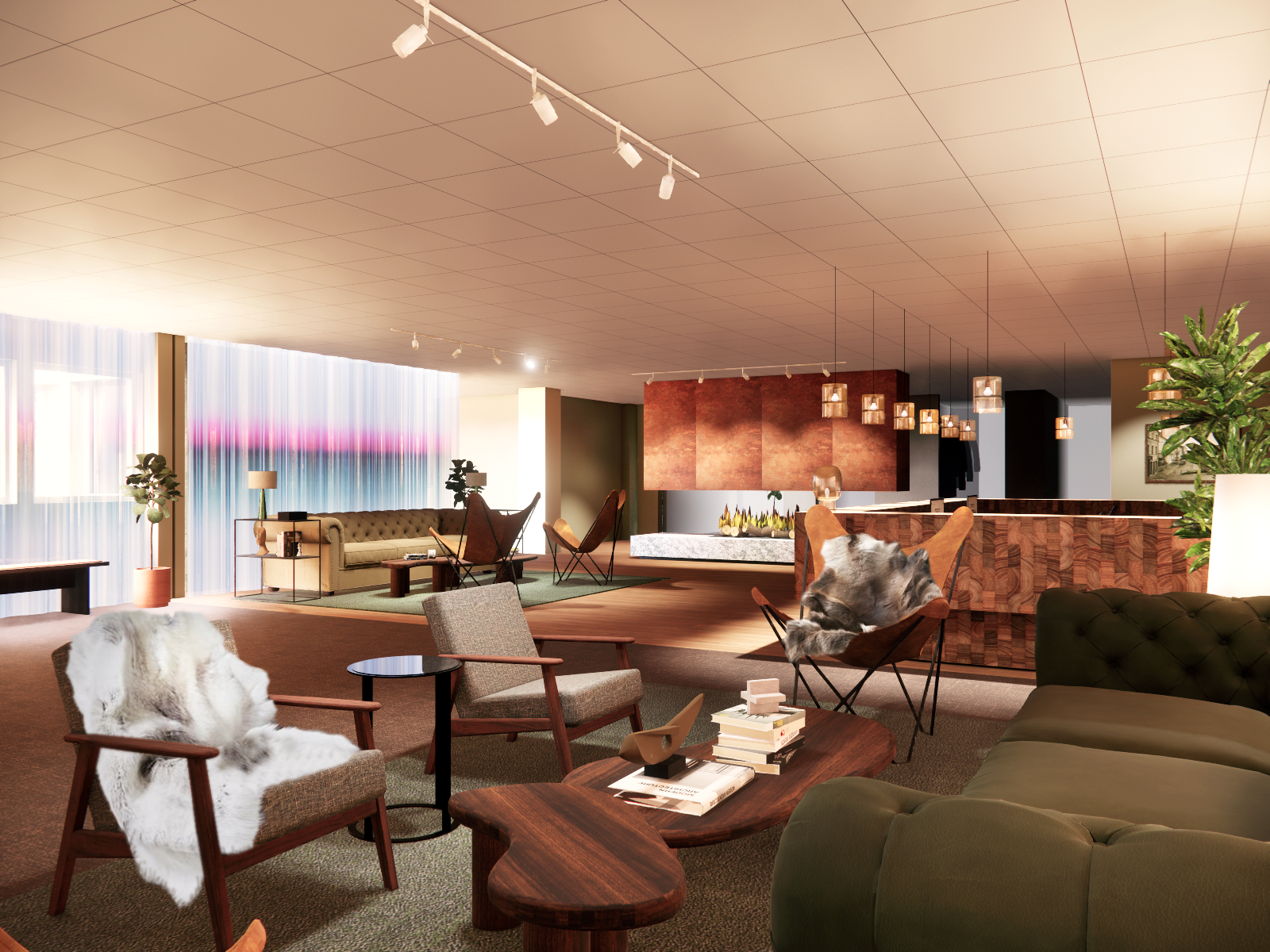
The Aurora Village: Worker accommodation beyond basic housing
In an interview with Axel Toyler, Head of Business Development at Adapteo Sweden, he explains that the focus when developing Aurora Village was not on the modules themselves, but on what the accommodation needed to achieve. The customer knew they needed more than rooms. They wanted a solution that would work in practice: safe, comfortable, and with opportunities for activity, recovery, and everyday routines. But the exact shape of that solution was left for Adapteo to develop.
That meant looking at the full everyday experience. If activities were important, what kinds of activities would actually support people living on site? If food was important, what would be the best way to provide it at scale? For example, rather than equipping every room with a small kitchen, Adapteo proposed a full canteen solution, making meals easier to manage at scale while creating a natural place for people to meet, eat and socialise.
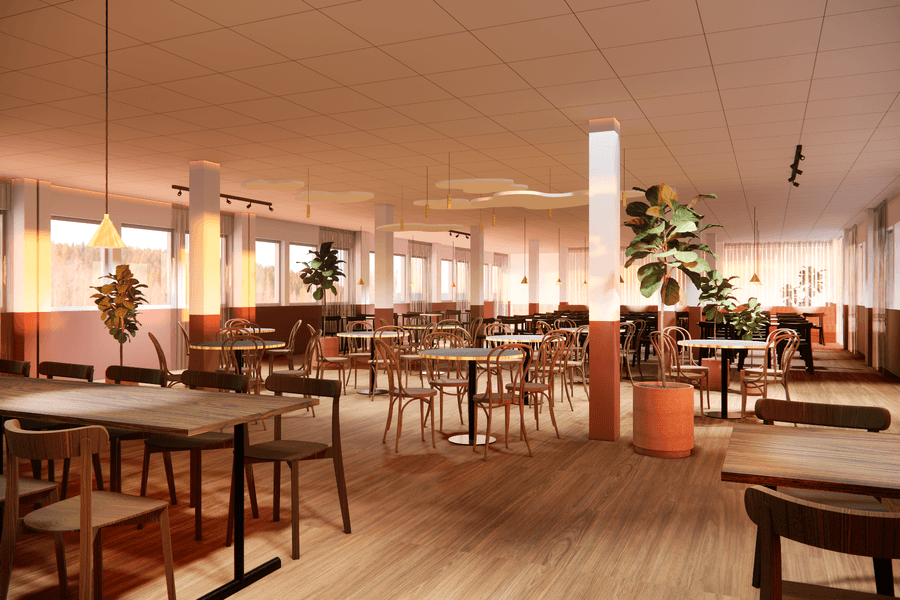
In other words, the dialogue was not about choosing individual features from a list, but more about understanding the functions the accommodation needed to fulfil, and then letting Adapteo take responsibility for shaping the complete solution.
Aurora is one example – not a template that every project needs to copy. A short-term project, a remote industrial site, an urban location and a long-term accommodation need can all require different choices. The strength of a modular approach is that the solution can be shaped to the location, timeline, service level, and workforce need.
Local communities and infrastructure
When hundreds of workers arrive in a smaller town or remote area, the housing market may not be able to cope. Hotels may be full. Rental housing may already be limited. Roads, parking, and local services may not be prepared for a sudden population increase. In short, it can put pressure on local communities.
Dedicated worker accommodation can reduce that pressure. Instead of competing with local residents for existing homes, the project gets the capacity it needs. With the right planning, accommodation can also support better transport flows, limit unnecessary traffic, and make everyday life functional for both residents and the local community.
The Boden case is a good example. Adapteo delivered 792 beds across two areas covering around 15,000 square metres for one of Sweden’s largest industrial projects. Bus connections were planned between the housing areas and the workplace, because getting people to and from the site is part of making the accommodation work.
.jpg?width=5457&height=3640&name=SE_WA_C15_CASE_MRKT_STEGRA_NYLANDSBACKEN_HIRES_2024%20(42).jpg)
Sustainability and flexibility
Project needs rarely stay exactly the same from start to finish. There may be a peak period when more people need accommodation, followed by a phase where fewer rooms are needed. The site may also need additional services, a different layout, or units moved as the project develops.
Modular accommodation is handy that way. Adapteo’s modules can be installed, reused, moved, renovated, and modernised, so they can continue to create value across several projects instead of being treated as single-use structures.
Flexibility also means a lower risk for the customer. A temporary or changing need does not have to become a permanent building decision. The solution can be adjusted as the project moves forward and the workforce changes.
5. One partner can reduce the burden on the project owner
Worker accommodation involves many decisions. We’re talking land, layout, permits, delivery, installation, safety, utilities, services and operations. It adds up and can quickly become a lot to manage, especially when the accommodation needs to be ready at the same time as the rest of the project.
Adapteo’s role is to make the accommodation process easier. We can run the full process from early planning and solution design to delivery, installation, scalability, service and operations.
The exact setup depends on the project and what the customer needs, but the goal is always the same: to help the customer and create accommodation that works. When one partner takes responsibility for the whole setup, the project owner can focus more on the project itself.
What to clarify when choosing worker accommodation
When choosing a worker accommodation solution, the project owner doesn’t need every answer from the start, but it’s a good idea to start the process by defining what the project might need.
These are things to consider:
How quickly does the workforce need to move in?
The timeline will shape the solution, of course, but there is often more flexibility than it might seem at first. Once we know when people need to move in, it becomes much easier to find the fastest reliable route from planning to delivery.
Where is the project located?
Remote locations, harsh weather, limited roads, ports, local infrastructure and ground conditions can all affect planning and delivery. These factors should be considered so the solution fits the site, and the number of residents.
How many people need accommodation?
The number of residents affects land use, building layout, utilities, service areas, transport and daily operations, and also how the solution may need to scale over time.
What standard is needed?
The right standard depends on the project, the workforce, and how the employer wants the accommodation to support the assignment. Sometimes a simpler setup is enough. In other cases, things like private rooms, social spaces and gyms make the project easier for the staff and more attractive for workers.
What services should be included?
Clarifying the service level makes it easier to understand what the customer wants to handle internally, and what should be managed by the accommodation partner. Is a complete setup with cleaning, laundry, meals, reception, security, booking systems, maintenance and operations needed, or is accommodation enough?
Which requirements need to be handled?
Worker accommodation needs to meet the relevant requirements for the project and location. This of course includes fire safety and ventilation, but also things like accessibility, permits, local regulations and operational requirements.
The project owner does not need to manage all of this alone, but the requirements need to be understood so they can be built into the solution from the start.
How will the solution affect the local community?
Transport, traffic, parking, housing pressure, local services and community engagement can all affect how the accommodation works. A good solution should support the project without creating unnecessary pressure on the surrounding area.
Can the solution scale if the project changes?
Workforce needs can change during a project. A good worker accommodation solution should be able to scale up, scale down or adapt if the timeline, number of residents or service needs change.
Explore related cases and resources
Worker accommodation looks different depending on the project. If you want to go deeper into the examples mentioned above, explore the related cases and guides:
-
Aurora Village: higher-standard accommodation designed around daily life, service and worker experience.
-
Hammerfest: time-critical accommodation in a remote northern location, delivered by Stord Innkvartering, part of Adapteo Group.
-
Boden: 792 beds across two areas, with transport planned between the housing areas and the workplace.
-
Worker accommodation 3 step guide: practical questions to clarify before choosing a solution.
- Expert interview: 5 worker accommodation mistakes to avoid
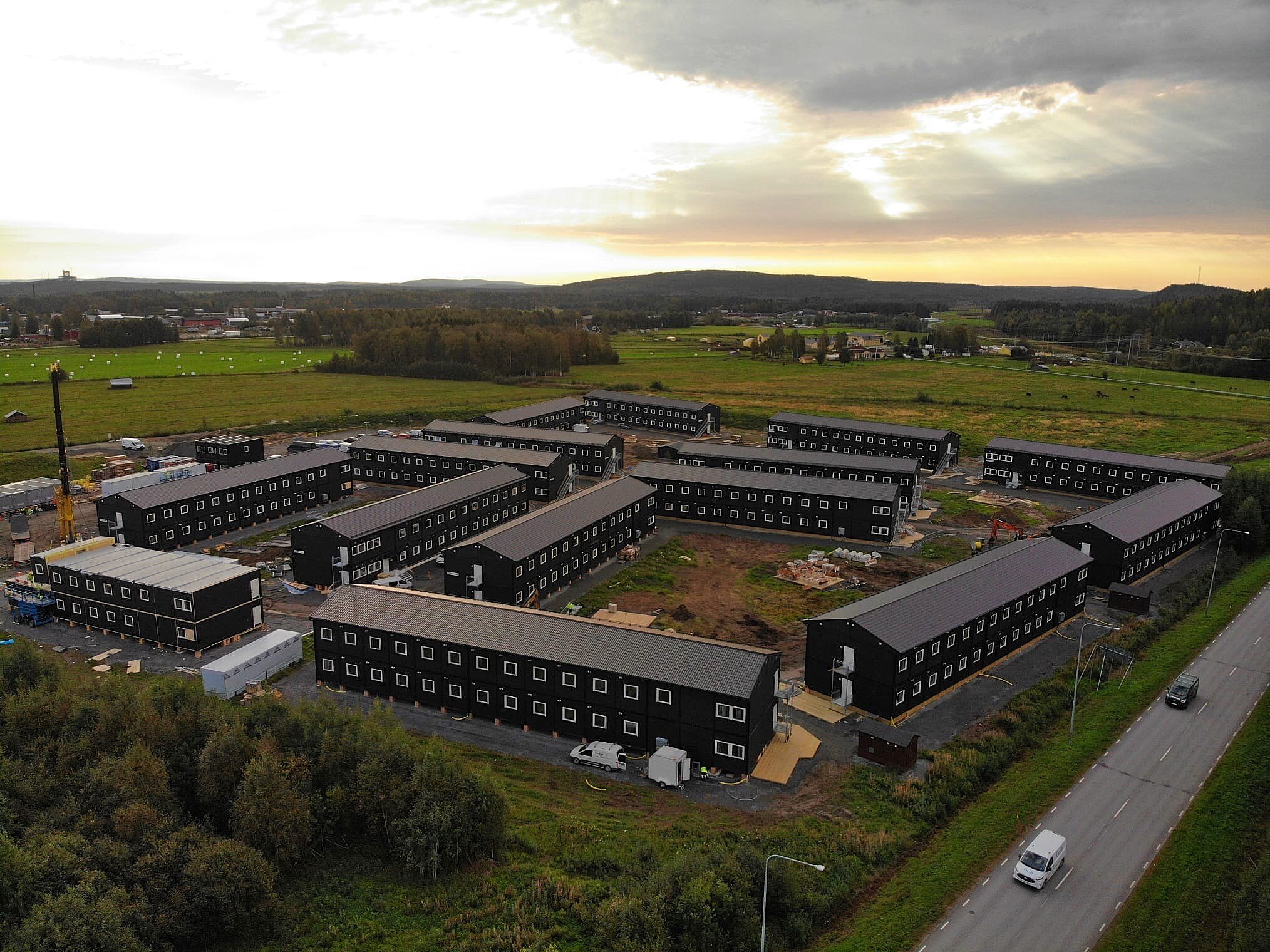
.jpg)
Worker accommodation is part of project success
Worker accommodation is a central part of a project’s success. It affects the project start. It affects risk. It affects compliance. It affects the local community. It affects worker wellbeing. And it affects whether the right people can arrive, stay and perform.
For project owners, the key question is not only: Where will people sleep? The better question is: What will our workforce need from day one?
That is where a full-service modular accommodation partner can help. With the right planning and the right partner, worker accommodation becomes less of a headache and more of a project enabler.