- 3 min reading
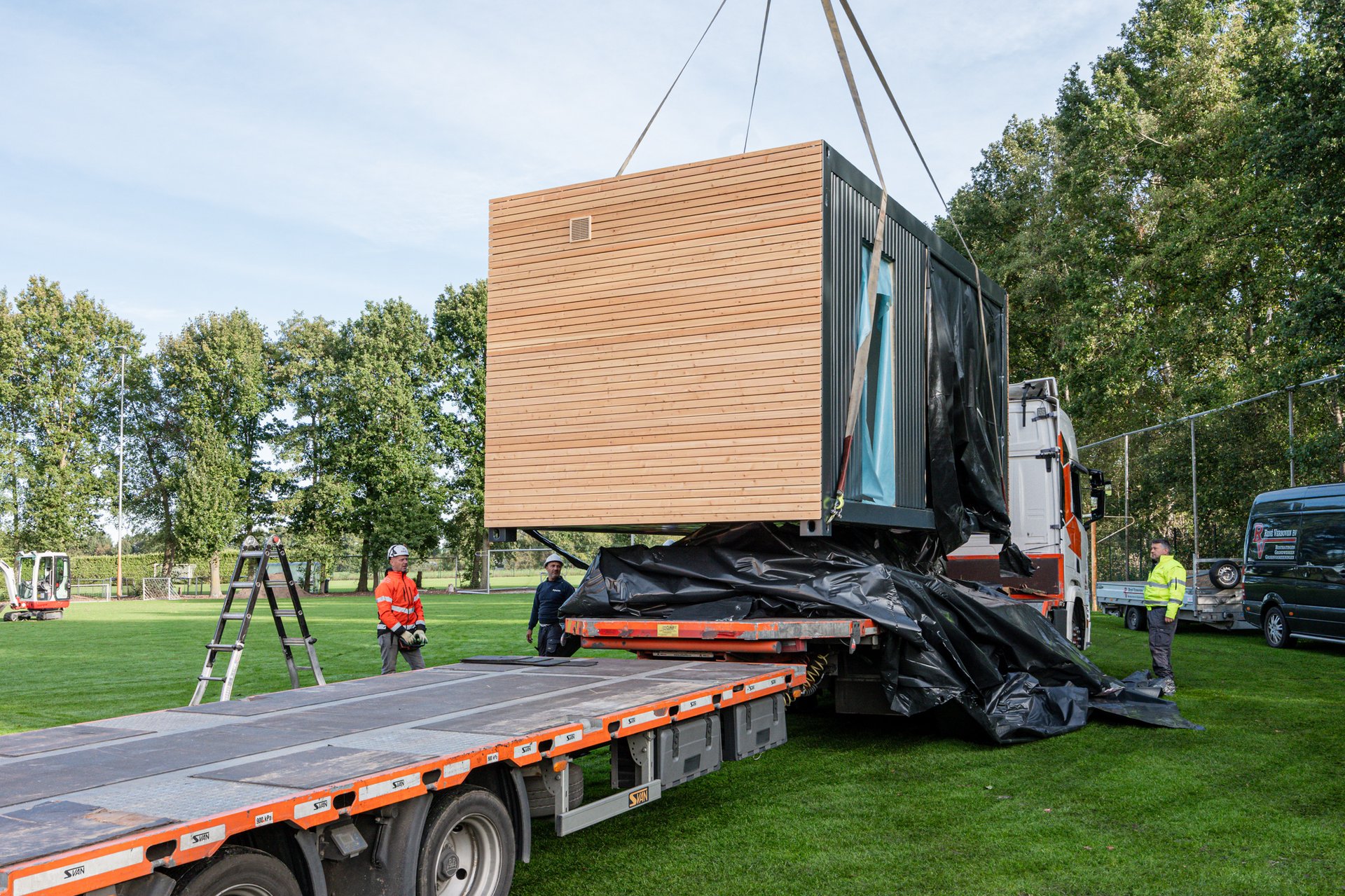
Modular buildings offer a flexible way for municipalities and organisations to respond to changing needs over time. Supported by industrialised construction and proven delivery models, they make it easier to adjust capacity without locking decisions too far into the future. Across the Nordics and Northern Europe, modular solutions are increasingly used to secure access to schools, offices, accommodation, and other public premises in a way that supports both long-term planning and day-to-day operations.
As communities grow and priorities shift, modular buildings offer a practical way to adapt. Below are six areas where modular thinking plays a clear role.
1. Supporting fast-growing communities
Communities develop quickly, and not always in ways that can be predicted. While some demographic trends can be anticipated, social, economic, or political changes often create sudden pressure on public infrastructure. For municipalities, this can mean needing additional schools, daycare facilities, or public buildings faster than traditional planning processes allow.
Temporary population increases, migration, or new business activity can quickly expose gaps in existing capacity. Traditional construction, with its long lead times and high upfront investment, often struggles to keep pace. Modular buildings offer a way to respond without committing to permanent solutions before needs are fully understood.
Modular buildings are used across schools, daycare centres, offices, accommodation, and event spaces. Built through industrialised processes, they can be delivered quickly, adjusted as requirements evolve, and reused over time across different locations.
An overview of selected projects can be found here.
2. Built to adapt to change
Change is constant, and planning for every scenario is rarely realistic. Municipalities, companies, and organisations need buildings that can respond when needs shift, whether those changes are expected or come with little warning.
Modular buildings work particularly well when space needs to adjust quickly, for example:
- Temporary expansions during renovation or peak seasons
- Short-term increases in capacity, such as rising numbers of students
- Launching new services or operations without committing to permanent infrastructure
- Creating new spaces quickly, aligned with business needs or local priorities
Our modular buildings can scale up or down as requirements change. They support growth, transitions, and temporary demand while still providing modern, comfortable environments for everyday use.
Flexibility and sustainability are closely linked in modular buildings. Modular design supports efficient energy use, lower material consumption, and reuse over time, making modular buildings both a practical choice and a more responsible one.
As an example, read about how we help the defence industry here.
3. Reliable access to the right space
Many municipalities work with long-term building strategies, but unexpected developments can still create immediate pressure. Sudden increases in enrolment, new regulatory requirements, or the closure of existing buildings often leave little time to find suitable alternatives.
Modular buildings provide a level of security by making the right type of space available when it is needed. Shorter production and installation timelines allow municipalities and organisations to respond quickly and maintain continuity in education, social services, and daily operations.
This ability to act within weeks rather than years helps reduce overcrowding, service disruption, and delays. For private organisations, it also means being able to continue or scale activities without waiting for permanent construction or infrastructure to be put in place, including in remote or less developed areas.
Whether the need is additional classrooms, temporary accommodation, or office space, modular buildings help maintain access to essential services while longer-term decisions are still being made.
Read about how we stepped in to offer support here.
4. Precision of space over time
Modular buildings give organisations the ability to align space provision precisely with real needs in scale, location, and duration. Unlike conventional real estate rental, where flexibility is limited to occupying or vacating a fixed asset, modular space itself can be deployed, scaled up or down, reconfigured, relocated, or removed entirely as demand evolves.
This precision helps organisations avoid overcapacity, reduce the risk of unused buildings, and shift resources toward productive use rather than maintaining space that no longer serves its purpose. Because the space itself can be added or returned in response to real-time needs, costs follow actual demand more closely than long-term assumptions tied to permanent assets.
We call this Space as a Service (SpaaS). It is a way of treating space as a flexible resource that grows, shrinks, or relocates with organisational priorities.
Read about our Space as a Service model here.
5. Sustainable materials and reduced waste
The environmental footprint of a building is shaped largely by the materials used and how they are handled during construction and over their life cycle. In modular building systems, this opens up opportunities to reduce impact from the outset.
Many of Adapteo's modular buildings use wood as a primary material. Compared with more conventional options such as steel or concrete, this generally results in a lower climate impact over the building’s lifetime.
Industrial production also changes how resources are used. Manufacturing modules in controlled environments allows materials to be used more precisely and waste to be kept to a minimum. Materials left over from one project can often be used in the next. This systematic approach supports both sustainability and efficiency in every stage of construction.
Over time, the ability to assemble, disassemble, and reconfigure modules extends the useful life of each building. This reduces the need for new materials and supports a more efficient use of resources as needs change.
Read about our commitment to sustainability here.
6. A circular life-cycle approach
Modular buildings are well suited to a circular way of building. Instead of being built for a single, static purpose, each module can be relocated, repurposed, and reused multiple times throughout its lifetime.
For example, a modular school building used in one municipality can later be transformed into an office, accommodation facility, or community centre elsewhere. On average, modular buildings can be used across up to five life cycles and serve different services and users over many years.
This life-cycle approach makes better use of existing buildings and reduces the environmental impact associated with new construction. It is a practical, scalable model that aligns with the transition toward a more sustainable and resource-efficient society.
Read more about how circularity is at our core here, and our Circularity Index here.
